Provisional Credit Reversals: Why Dispute Credits Get Pulled Back (2026)
A provisional credit is temporary. Learn why banks reverse dispute credits, how reversals show up in Stripe, Adyen and PayPal, and how merchants and cardholders should track them.
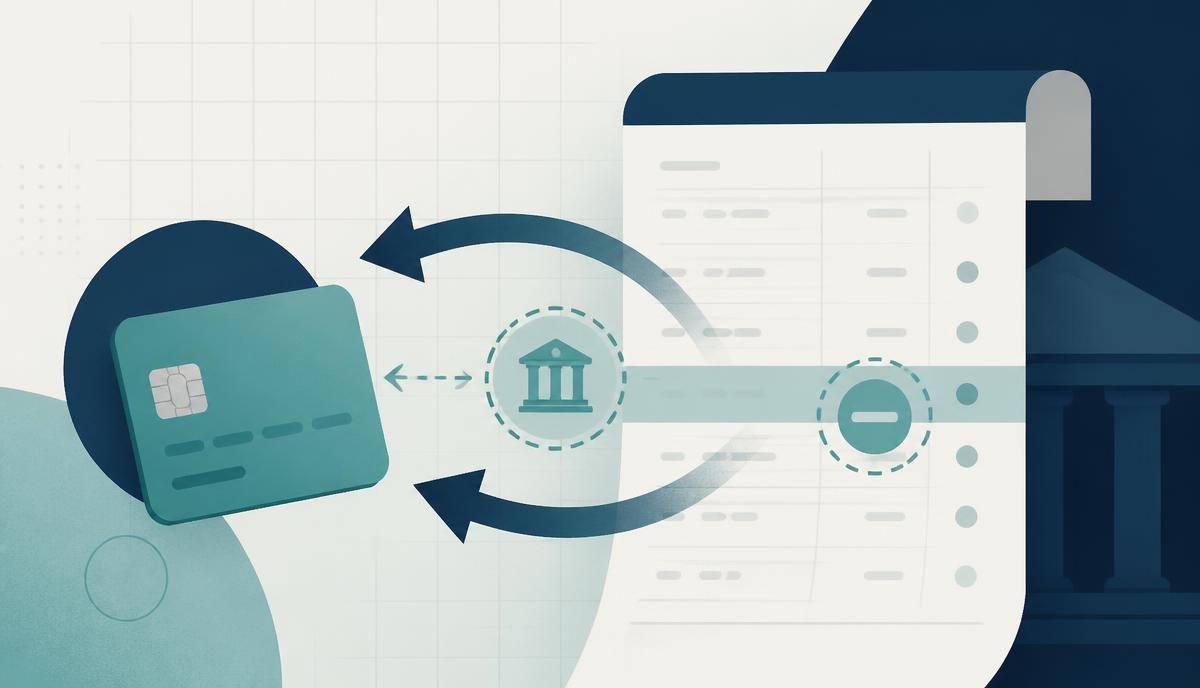
A provisional credit reversal happens when a bank takes back the temporary refund it gave a cardholder while a dispute was being investigated. The credit was never final — it was a placeholder, and once the case is decided the placeholder disappears.
This is one of the most confusing moments in the dispute lifecycle. Cardholders see money appear and then vanish. Merchants see a debit, then a credit, then another debit, and struggle to reconcile it. Understanding the mechanics removes most of the confusion.
What is a provisional credit?
When a cardholder disputes a transaction, US regulations (Regulation E for debit cards, Regulation Z for credit cards) require the issuing bank to act quickly. Rather than making the customer wait out a 30–90 day investigation, the bank fronts the money.
That temporary posting is the provisional credit:
- It is issued by the issuing bank, not by the merchant.
- It typically appears within 10 business days of the claim for debit disputes.
- It is conditional on the outcome of the investigation.
- It is not a refund — the merchant has not agreed to anything.
At the same time, the merchant is debited through their acquirer. See our guide on what a chargeback is for how that money movement works end to end.
Why provisional credits get reversed
A reversal means the issuer concluded the original charge was valid. The most common triggers:
1. The merchant won representment. Compelling evidence — delivery confirmation, AVS/CVV match, device fingerprint, prior undisputed orders — showed the cardholder authorised and received the purchase. 2. The cardholder did not respond. Banks routinely request an affidavit or written statement. No response inside the window closes the claim. 3. The claim was filed too late. Reg E gives 60 days from the statement date. Outside that, the provisional credit is often unwound. 4. A duplicate remedy was found. The merchant already refunded the order, so leaving the credit in place would pay the customer twice. 5. The claim was recategorised. A "fraud" claim reclassified as a service or quality dispute may fall outside the protections that justified the credit.
Point 5 matters for merchants: a large share of fraud-coded disputes are actually friendly fraud, and reclassification is often what triggers the reversal.
The reversal timeline
| Stage | Typical timing | What the cardholder sees | What the merchant sees |
|---|---|---|---|
| Claim filed | Day 0 | Dispute opened | Chargeback notification + debit |
| Provisional credit | Day 1–10 | Temporary credit posted | No change |
| Evidence submitted | Day 7–21 | Nothing | Representment filed |
| Issuer decision | Day 30–90 | Notice of outcome | Win or loss posted |
| Credit reversed | 5–10 days after decision | Credit removed | Funds returned |
Banks must generally give the cardholder advance written notice before removing a provisional credit, and many allow a short grace period so pending transactions do not overdraw the account.
How reversals appear in each processor
Stripe
Stripe models the dispute lifecycle in the `charge.dispute.*` events. The sequence to watch:
- `charge.dispute.created` — funds withdrawn, plus the dispute fee.
- `charge.dispute.updated` — evidence submitted or the issuer requested more.
- `charge.dispute.closed` with `status: won` — the provisional credit was reversed on the cardholder side and your funds are returned as a `balance_transaction` of type `adjustment`.
Reconcile on the balance transaction, not the dispute object: the dispute status flips before the money lands. Our Stripe dispute evidence checklist covers what to submit to make a win likely in the first place.
Adyen
Adyen sends `CHARGEBACK`, then `CHARGEBACK_REVERSED` or `SECOND_CHARGEBACK` notifications. `CHARGEBACK_REVERSED` is the merchant-side equivalent of the cardholder's provisional credit being pulled back. Watch for `SECOND_CHARGEBACK`, which means the issuer re-disputed after your win — the money leaves again and cannot usually be contested further.
PayPal
PayPal uses case states rather than events: `UNDER_REVIEW` → `RESOLVED`. A resolution of `SELLER_FAVOUR` releases the hold on your funds; the buyer's temporary credit disappears. PayPal holds rather than debits in many cases, so reconciliation differs from card rails.
Braintree, Square, Shopify Payments
All three follow the same underlying card-network flow with different labels: a "won" dispute produces an adjustment credit back to the merchant and a reversal on the cardholder's statement.
How merchants should track reversals
Reversals are where most merchants lose accounting accuracy. Three practices fix it:
- Track disputes as their own ledger entries, not as negative sales. A dispute has at least two money movements — debit at open, credit or confirmation at close — plus a non-refundable fee.
- Reconcile on settlement objects. Processor dispute statuses change before funds move; your books should follow the balance transaction or settlement line.
- Keep the fee separate. Winning a dispute does not return the $15–$25 fee. Modelling it as recovered revenue overstates your true recovery rate. Our hidden cost breakdown walks through the full arithmetic.
What cardholders should know
If your provisional credit was reversed:
- You should have received written notice explaining the decision and the evidence relied on.
- You can request the documents the bank used. Issuers must supply them on request.
- You can appeal, usually with new evidence — a returned-item receipt, a cancellation confirmation, a written exchange with the seller.
- Contact the merchant directly first. Many disputes are resolved faster as a straightforward refund. Our chargeback vs refund guide explains why that route is usually better for everyone.
Preventing reversal surprises
For merchants, the best outcome is not winning a reversal — it is never receiving the dispute. That means clear billing descriptors, prompt refunds, delivery confirmation on every order, and proactive alerts. See how to prevent chargebacks for the full playbook.
For the disputes you do receive, speed and evidence quality decide the outcome. RecovraFlow syncs disputes from Stripe and PayPal automatically, drafts structured evidence, and tracks each case through to the reversal so your ledger and your win-rate numbers stay accurate.
FAQ
Is a provisional credit the same as a refund? No. A refund is final and issued by the merchant. A provisional credit is temporary and issued by the bank while it investigates.
How long does a provisional credit last? Until the investigation closes — typically 30–90 days, sometimes longer for complex or international disputes.
Can a bank reverse a provisional credit without notice? Generally no. Issuers are expected to give written notice before debiting the credit back.
Does a reversal mean the merchant won? Usually yes. A reversal on the cardholder's side normally corresponds to a merchant win in representment.
Can I dispute a provisional credit reversal? Yes — you can appeal to the issuer with new evidence, though the bar is higher on a second review.
Do merchants get the dispute fee back after a reversal? No. The fee is retained by the processor regardless of outcome.